By Rolland Nwanua
No one begged to come into this world. I believe that a man does not deserve to bring a child into this world until he has created a favourable ground for the child. If you think the atmosphere in the society, in the country is not favourable for you, why bring someone else to suffer the same fate?
You desire so much to leave the country to a place where you can accumulate riches for yourself. You may actually succeed. But no amount of wealth you accumulate can really guarantee the future of your children. Material wealth have no reality of their own, they can fade away at any moment.
I know of a billionaire investor who lost his investments in 3 months. He committed suicide because he couldn’t stand it.
And if you succeed in staying on top through out your lifetime without falling, what guarantee do you have that your children – who don’t know all the pain it took you to accumulate the riches – will be able to manage what you left for them?
The most formidable guarantee you can give yourself is to build a nation rather than build a man.
Let us sacrifice today. Let us use today to appease God so He can bless our tomorrow.
If the economy is buoyant and, there is political stability and, everything else is in its right proportion, the only labour that the next generation will perform will be that of harvesting.
Men and women of my generation, let us sow the seed, even if we have to do it in tears; let us water it, though it may be painful to our body; let us, then, wait patiently for our crop to mature, even if we have to do so with hunger in our stomach; we shall then get the reward of harvesting with smiles on our faces. Our children and children’s children will not suffer the same fate that their fathers suffered. They will harvest with smiles on their faces the ripe fruits.
This was what some men did that made some nation to be known today as developed. This is what men with reason do. It is the attribute of wise men. Men and women of my generation, let us sacrifice today for tomorrow.
Friday, March 12, 2010


Wednesday, March 3, 2010
BOLA IGE
By Elvis Abu
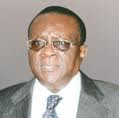
He was a Senior Advocate of Nigeria and a politician. He was born September 13, 1930 in Zaria, northern Nigeria. His parents were of Yoruba tribe from Esa-Oke village, in the old Oyo State (now in Osun State).
He studied at Ibadan Grammar School between 1943 and 1948 and, the University of Ibadan. He proceeded to London where he continued his education at the University College London. In 1959 he got a degree in Law in this university. In 1961 he was called to bar in London’s inner Temple.
At age 31 he was at the frontline of the action group crisis; this was during the first republic 1963-1966.
Between 1967 and 1970 Bola Ige was the Commissioner for Agriculture in the western region of Nigeria. In the early 1970s, he gave his energy to the anti-racism campaign of the World Council of Churches.
In 1979, during General Olusegun Obasanjo’s administration, Ige was elected governor of Oyo State and he served until 1983. He had become friends with the General some year earlier.
When General Olusegun Obasabjo came to power again in 1999, Ige was appointed Minister of Justice and Attorney General of the Federal Republic of Nigeria. He opposed the idea of Sharia Law being imposed in the Northern Nigeria.
When president Obasanjo went on official visit to Oyo State, he was received in a presidential reception at the liberty stadium, joined by Bisi Akande, the governor of Osun State, Lam Adesina, the governor of Oyo State and Bola Ige. Bisi Akande narrated how the crowd welcomed Ige, who entered after the others, with “a jubilant and deafening shouts of Ige! Ige!! Ige!!!” The love the people had for him made him steal the show in a presidential reception where the president of the country was expected to get the highest attention.
While in prison, he wrote a book titled: People, Politics and Politicians of Nigeria: 1940-1979, among others.
A man loved by the people; he was a patron of the arts, a mentor to the youths.
On 23 December 2001, he died by the bullet of an assassin right in his own home. He was mourned by Nigerians all over and, justice was demanded for his murder.
References: www.wikipidia.com
www.dawodu.com
He was a Senior Advocate of Nigeria and a politician. He was born September 13, 1930 in Zaria, northern Nigeria. His parents were of Yoruba tribe from Esa-Oke village, in the old Oyo State (now in Osun State).
He studied at Ibadan Grammar School between 1943 and 1948 and, the University of Ibadan. He proceeded to London where he continued his education at the University College London. In 1959 he got a degree in Law in this university. In 1961 he was called to bar in London’s inner Temple.
At age 31 he was at the frontline of the action group crisis; this was during the first republic 1963-1966.
Between 1967 and 1970 Bola Ige was the Commissioner for Agriculture in the western region of Nigeria. In the early 1970s, he gave his energy to the anti-racism campaign of the World Council of Churches.
In 1979, during General Olusegun Obasanjo’s administration, Ige was elected governor of Oyo State and he served until 1983. He had become friends with the General some year earlier.
When General Olusegun Obasabjo came to power again in 1999, Ige was appointed Minister of Justice and Attorney General of the Federal Republic of Nigeria. He opposed the idea of Sharia Law being imposed in the Northern Nigeria.
When president Obasanjo went on official visit to Oyo State, he was received in a presidential reception at the liberty stadium, joined by Bisi Akande, the governor of Osun State, Lam Adesina, the governor of Oyo State and Bola Ige. Bisi Akande narrated how the crowd welcomed Ige, who entered after the others, with “a jubilant and deafening shouts of Ige! Ige!! Ige!!!” The love the people had for him made him steal the show in a presidential reception where the president of the country was expected to get the highest attention.
While in prison, he wrote a book titled: People, Politics and Politicians of Nigeria: 1940-1979, among others.
A man loved by the people; he was a patron of the arts, a mentor to the youths.
On 23 December 2001, he died by the bullet of an assassin right in his own home. He was mourned by Nigerians all over and, justice was demanded for his murder.
References: www.wikipidia.com
www.dawodu.com
Monday, February 22, 2010
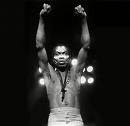
FELA ANIKULAKPO KUTI
ONE MAN, TOO MUCH FOR ONE NATION
By Elvis Abu
Born in Abeokuta, Nigeria on 15 October 1938. He was a singer, a composer, a multi-instrumentalist, human rights activist and a politician. He was one of Africa’s most controversial musicians. His fearless nature reflected clearly in his music. Even with all the dangers of the time, he continuously attacked the military government of Nigeria through his music.
Fela, came from an influential home. His father, Reverend Israel Oludotun Ransome-Kuti was a protestant minister and a school principal and was the first president of the Nigerian Union of Teachers. His mother, Funmilayo Ransome-Kuti was a leading figure in the anti-colonialist struggle. She was also the first woman in Nigeria to drive a car. Indeed it was a family of pace setters.
In 1958 Fela was sent to London to study medicine but chose to study music instead. While in London, he set up a band he called Koola Lobitos. He renamed his band Africa 70 and, later Egypt 80. In 1960, he married his first wife, Remilekun Taylor. In 1963 he returned to Nigeria and opened a night club; he called it the ‘Shrine.’ His music was a blend of African rhythm with politicized lyrics.
Fela also changed his middle name to Anikulapo (meaning "he who carries death in his pouch"); he said that his original middle name ‘Ransome’ was a slave name. His music was politically motivated as he fearlessly lashed out at the ruling government. He was outstanding for his courage and untiring fight for the common man. This made him one of the major targets for the police and army. Frequently, they sacked his residence and recording studio which he called Kalacuta Republic. During one of the raids, a thousand soldiers attacked the residents of the Kalacuta Republic and his elderly mother was thrown down from the window. Fela sent the coffin of his dead mother to the Dodan barracks and he was inspired by the incidence to write a song titled, ‘coffin for the Head of State.’
At one of his concerts in Ghana, where he performed his hit track titled ‘Zombie,’ a riot broke out which led to his being banned from entering into Ghana.
Fela formed a political party, ‘Movement of the People’ and came out to campaign for presidency in the 1979 election but his candidature was turned down. In 1984 he was jailed and, released after 20 months. In 1989 he released an anti-apartheid album titled "Beasts of No Nation." In this album he attacked the US president Ronald Reagan, UK Prime Minister Margaret Thatcher and South African Prime Minister P.W. Botha. He was fearless indeed. Due to his fearless nature he was nick named ‘Abami eda’ (meaning, ‘a mysterious creature’).
A countless times he was beaten, arrested and jailed. But it seemed that the military brutality only made him tougher. His was a spirit that could never be broken.
Saturday, August 2, 1997 ‘the wonderful creature’ departed from this world after battling with complications due to AIDS. It’s been 13 years after his death and the Shrine still attracts a large crowd on daily basis. It seems the real meaning of the word ‘Shrine’ is now more obvious with the large number of people that trop in there, not just to watch the performance of musicians but for the love and respect they have for the charismatic revolutionary singer.
I remember the word of Socrates. Standing before the jury, shortly before he was sentenced to death, he said to the people of Athens, ‘Men of Athens, pray to God to give you another gat fly like me.’ Fela was a gat fly that Nigerians have to pray to have another of his type.
References: Wikipedia, African Music Encyclopedia.
By Elvis Abu
Born in Abeokuta, Nigeria on 15 October 1938. He was a singer, a composer, a multi-instrumentalist, human rights activist and a politician. He was one of Africa’s most controversial musicians. His fearless nature reflected clearly in his music. Even with all the dangers of the time, he continuously attacked the military government of Nigeria through his music.
Fela, came from an influential home. His father, Reverend Israel Oludotun Ransome-Kuti was a protestant minister and a school principal and was the first president of the Nigerian Union of Teachers. His mother, Funmilayo Ransome-Kuti was a leading figure in the anti-colonialist struggle. She was also the first woman in Nigeria to drive a car. Indeed it was a family of pace setters.
In 1958 Fela was sent to London to study medicine but chose to study music instead. While in London, he set up a band he called Koola Lobitos. He renamed his band Africa 70 and, later Egypt 80. In 1960, he married his first wife, Remilekun Taylor. In 1963 he returned to Nigeria and opened a night club; he called it the ‘Shrine.’ His music was a blend of African rhythm with politicized lyrics.
Fela also changed his middle name to Anikulapo (meaning "he who carries death in his pouch"); he said that his original middle name ‘Ransome’ was a slave name. His music was politically motivated as he fearlessly lashed out at the ruling government. He was outstanding for his courage and untiring fight for the common man. This made him one of the major targets for the police and army. Frequently, they sacked his residence and recording studio which he called Kalacuta Republic. During one of the raids, a thousand soldiers attacked the residents of the Kalacuta Republic and his elderly mother was thrown down from the window. Fela sent the coffin of his dead mother to the Dodan barracks and he was inspired by the incidence to write a song titled, ‘coffin for the Head of State.’
At one of his concerts in Ghana, where he performed his hit track titled ‘Zombie,’ a riot broke out which led to his being banned from entering into Ghana.
Fela formed a political party, ‘Movement of the People’ and came out to campaign for presidency in the 1979 election but his candidature was turned down. In 1984 he was jailed and, released after 20 months. In 1989 he released an anti-apartheid album titled "Beasts of No Nation." In this album he attacked the US president Ronald Reagan, UK Prime Minister Margaret Thatcher and South African Prime Minister P.W. Botha. He was fearless indeed. Due to his fearless nature he was nick named ‘Abami eda’ (meaning, ‘a mysterious creature’).
A countless times he was beaten, arrested and jailed. But it seemed that the military brutality only made him tougher. His was a spirit that could never be broken.
Saturday, August 2, 1997 ‘the wonderful creature’ departed from this world after battling with complications due to AIDS. It’s been 13 years after his death and the Shrine still attracts a large crowd on daily basis. It seems the real meaning of the word ‘Shrine’ is now more obvious with the large number of people that trop in there, not just to watch the performance of musicians but for the love and respect they have for the charismatic revolutionary singer.
I remember the word of Socrates. Standing before the jury, shortly before he was sentenced to death, he said to the people of Athens, ‘Men of Athens, pray to God to give you another gat fly like me.’ Fela was a gat fly that Nigerians have to pray to have another of his type.
References: Wikipedia, African Music Encyclopedia.
Friday, February 5, 2010
FELICIA MARTINS
A HEART FOR HUMANITY
By Rolland Nwanua
With her chosen career she will arouse compassion in anyone who comes across her and, will keep you wondering why on earth she chose or even copes with taking care of the mentally challenged people.
The first time I saw Felicia I was filled with awe, wondering why she chose to do what she is doing. But then, her explanation of the constant revelation she got, with a direction to go and take care of the destitute further strengthened my belief that destiny will assert itself even when you try to run away from it.
She is married with five children and hails from Ikwuano North Local Government Area in Abia State, Nigeria. From 1997 she had nurtured the desire to take care of insane people. She was, then, a 300level student of Law in the Lagos State University (LASU). In 1999 she established a home for the insane which she called: The Society for the Safety of the Insane and Destitute (SOSAID).
She said, “I intended to practice Law after graduation to help the less privileged in the society but not knowing God was directing my steps to the mentally challenged which I initially refused to take up until I failed all my courses that semester”. She intended to study Law to help the less privileged, all the same, she still helps the less privileged, though without Law.
Before building a home for them she would cook and take food to the insane on the street and bath the ones that are not violent. Now that she has a home for them the care is greater. "It will interest you that l dine with them in the same plate, because I am passionate in making sure that they have the sense of personal belonging that is needed to bring them back to their senses,"
In the year 2000, by the assistance of a compassionate Nigerian, she was able to get a wood shelter where she accommodated the inmates taken from the streets. The attention they could not get from their own family, they got it all from Felicia. With the assistance of some people who volunteer to work with Felicia martins, the inmates were fed, bathed and have their wounds treated. Many have regained sanity and volunteer to help rehabilitate others. In some cases, love is all that a mentally ill person needs to live a normal life again.
She failed all her courses in a semester and couldn’t continue with her study. Though it was painful seeing her dream of becoming a lawyer come to an end – at least for now – she said she has no regret because she is working for humanity.
The home has about 180 inmates including children. With her success in rehabilitating an elderly man who had been mad for 30 years, she said, “when an inmate is cured of insanity and remembers who he or she is, where he hails from and what he was doing previously, we go on a fact finding journey to actually determine if what he or she said is correct.” Some families are unwilling to welcome back a rehabilitated person, fearing that such person might still have traces of insanity. In such case she allows the rehabilitated person to remain with her so as not to face a situation that will trigger the crisis while living with a reluctant family.
Her family rejected her, believing that she was insane herself; her husband threw her out for eight months, her son slapped her; eventually, they agreed with her mission. Presently, SOSAID has branches in different states within the country.
If you ask me, I think this is the dept of love for humanity and one of the most essential contributions to society.
References: THE SUN.Tuesday,June 30, 2009
THE GUARDIAN Saturday, November 14, 2009
By Rolland Nwanua
With her chosen career she will arouse compassion in anyone who comes across her and, will keep you wondering why on earth she chose or even copes with taking care of the mentally challenged people.
The first time I saw Felicia I was filled with awe, wondering why she chose to do what she is doing. But then, her explanation of the constant revelation she got, with a direction to go and take care of the destitute further strengthened my belief that destiny will assert itself even when you try to run away from it.
She is married with five children and hails from Ikwuano North Local Government Area in Abia State, Nigeria. From 1997 she had nurtured the desire to take care of insane people. She was, then, a 300level student of Law in the Lagos State University (LASU). In 1999 she established a home for the insane which she called: The Society for the Safety of the Insane and Destitute (SOSAID).
She said, “I intended to practice Law after graduation to help the less privileged in the society but not knowing God was directing my steps to the mentally challenged which I initially refused to take up until I failed all my courses that semester”. She intended to study Law to help the less privileged, all the same, she still helps the less privileged, though without Law.
Before building a home for them she would cook and take food to the insane on the street and bath the ones that are not violent. Now that she has a home for them the care is greater. "It will interest you that l dine with them in the same plate, because I am passionate in making sure that they have the sense of personal belonging that is needed to bring them back to their senses,"
In the year 2000, by the assistance of a compassionate Nigerian, she was able to get a wood shelter where she accommodated the inmates taken from the streets. The attention they could not get from their own family, they got it all from Felicia. With the assistance of some people who volunteer to work with Felicia martins, the inmates were fed, bathed and have their wounds treated. Many have regained sanity and volunteer to help rehabilitate others. In some cases, love is all that a mentally ill person needs to live a normal life again.
She failed all her courses in a semester and couldn’t continue with her study. Though it was painful seeing her dream of becoming a lawyer come to an end – at least for now – she said she has no regret because she is working for humanity.
The home has about 180 inmates including children. With her success in rehabilitating an elderly man who had been mad for 30 years, she said, “when an inmate is cured of insanity and remembers who he or she is, where he hails from and what he was doing previously, we go on a fact finding journey to actually determine if what he or she said is correct.” Some families are unwilling to welcome back a rehabilitated person, fearing that such person might still have traces of insanity. In such case she allows the rehabilitated person to remain with her so as not to face a situation that will trigger the crisis while living with a reluctant family.
Her family rejected her, believing that she was insane herself; her husband threw her out for eight months, her son slapped her; eventually, they agreed with her mission. Presently, SOSAID has branches in different states within the country.
If you ask me, I think this is the dept of love for humanity and one of the most essential contributions to society.
References: THE SUN.Tuesday,June 30, 2009
THE GUARDIAN Saturday, November 14, 2009
CHIKE OBI
ONE OF THE WORLD’S GREATEST MATHEMATICIANS
By Rolland Nwanua
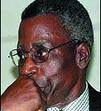
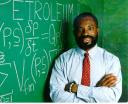
He was born Chike Edozien Umezei Obi in April 17 1921 in Zaria, (Northern Nigeria). He was the son of Nathaniel Okafor Edozien, a direct descendant of Nnebisi (the founder of Asaba) and one of the most senior idigenous officials of the Nigerian coal Corporation in Enugu. His mother, Nwakuso Edozien (née Odogwu), was the daughter of a prominent Asaba chief, and a notable trader. He is married to Melinda, who is also a mathematician.
Obi is a mathematician, author and a poverick politician.
He had his education in different parts of Nigeria and proceeded to the University of London to study mathematics. After his first degree, he went for a research study at the Pembroke Collage, Cambidge, which he did on scholarship. In 1950, he obtained a PhD in mathematics at the Massachusetts Institute of Technology, Cambridge, USA. According to the African Mathematics Union, he was the first in Sub-Saharan Africa to hold a doctorate in mathematics.
He returned to his homecountry to become a lecturer at the University of Ibadan (1959-62) and later at the University of Lagos (UNILAG) (1970) where he became a professor. He was Dean of the School of Mathematics and Physical Sciences of UNILAG (1971-73), Chairman, Department of Mathematics, UNILAG (1971-77), acting Dean, Faculty of Science of UNILAG (1981-82). He was a visiting professor to the University of Rhode Island, USA. He returned to the Eastern part of Nigeria and there, he established his Nanna Institute of Scientific Studies.
He retired from lecturing work as an Emeritus Professor in 1985.
Relying just on his brain, Obi gave the proof to Famat’s Last Theorem, a mathematical puzzule of 361 years. For over three centuries, Western mathematicians strained at this theorem until 1994, when they solved it, with the aid of modern technological gadgets, such as the computer. This work was carried out at his Nanna Institute of Scientific Studies in Onitsha, Eastern Nigeria to encourage research work and “to bring about a scientific technological revolution in Nigeria”. He became world renowned for his mathematical exploit.
After Nigeria’s independence in 1960, He was elected a legislator in the Eastern House of Assembly the same year. He was arrested and charged with treason along with Obafemi Awolowo, but was released as no evidence was found.
Obi authored many books and jornals on mathematics and Nigerian politics. He died in match 13 2008 at the age of 87.
Awards: He won the Sigvard Ecklund Prize,
Recieved the national honour of Commander of the Order of the Niger (CON),
A Fellow of the Nigerian Academy of Science,
University of Lagos Silver Jubilee Anniversary Gold Medal Award
Refferences: Wikipedia, The Nigerian Gardian - martch 27 2008
Generation of Domination
By Rolland Nwanua
He was born Chike Edozien Umezei Obi in April 17 1921 in Zaria, (Northern Nigeria). He was the son of Nathaniel Okafor Edozien, a direct descendant of Nnebisi (the founder of Asaba) and one of the most senior idigenous officials of the Nigerian coal Corporation in Enugu. His mother, Nwakuso Edozien (née Odogwu), was the daughter of a prominent Asaba chief, and a notable trader. He is married to Melinda, who is also a mathematician.
Obi is a mathematician, author and a poverick politician.
He had his education in different parts of Nigeria and proceeded to the University of London to study mathematics. After his first degree, he went for a research study at the Pembroke Collage, Cambidge, which he did on scholarship. In 1950, he obtained a PhD in mathematics at the Massachusetts Institute of Technology, Cambridge, USA. According to the African Mathematics Union, he was the first in Sub-Saharan Africa to hold a doctorate in mathematics.
He returned to his homecountry to become a lecturer at the University of Ibadan (1959-62) and later at the University of Lagos (UNILAG) (1970) where he became a professor. He was Dean of the School of Mathematics and Physical Sciences of UNILAG (1971-73), Chairman, Department of Mathematics, UNILAG (1971-77), acting Dean, Faculty of Science of UNILAG (1981-82). He was a visiting professor to the University of Rhode Island, USA. He returned to the Eastern part of Nigeria and there, he established his Nanna Institute of Scientific Studies.
He retired from lecturing work as an Emeritus Professor in 1985.
Relying just on his brain, Obi gave the proof to Famat’s Last Theorem, a mathematical puzzule of 361 years. For over three centuries, Western mathematicians strained at this theorem until 1994, when they solved it, with the aid of modern technological gadgets, such as the computer. This work was carried out at his Nanna Institute of Scientific Studies in Onitsha, Eastern Nigeria to encourage research work and “to bring about a scientific technological revolution in Nigeria”. He became world renowned for his mathematical exploit.
After Nigeria’s independence in 1960, He was elected a legislator in the Eastern House of Assembly the same year. He was arrested and charged with treason along with Obafemi Awolowo, but was released as no evidence was found.
Obi authored many books and jornals on mathematics and Nigerian politics. He died in match 13 2008 at the age of 87.
Awards: He won the Sigvard Ecklund Prize,
Recieved the national honour of Commander of the Order of the Niger (CON),
A Fellow of the Nigerian Academy of Science,
University of Lagos Silver Jubilee Anniversary Gold Medal Award
Refferences: Wikipedia, The Nigerian Gardian - martch 27 2008
Generation of Domination
KEN SARO-WIWA
By Rolland Nwanua
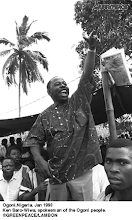
His full name is Kenule Benson Tsaro-Wiwa. He was born in Bori, Rivers State, to Jim Beesom Wiwa, a businessman and community chief, and Widy, a farmer. Ken Saro-Wiwa won a scholarship at the age of 13 to study at Government College in Umuahia the same school where Chinua Achebe had studied.
Ken proceeded to the University of Ibadan. After his graduation he taught at the government college in Umuahia, and at Stella Maris College in Port Harcourt. He also lectured at the University of Lagos. He was the editor of a campus magazine: The Horizon. During the Nigerian civil war he was the administrator for the oil depot at Bonny Island. He also served in the Rivers State Cabinet as a regional commissioner for education. Ken must have spoken out with the aggression of an activist when he made known his opinion on the autonomy for the Ogoni people, for he was dismissed in 1973.
With his writings, Ken drew national and international attention to the campaign of the Ogoni people. According to him, "a writer cannot be a mere storyteller; he cannot be a mere teacher; he cannot merely X-ray society's weaknesses, its ills, its perils. He or she must be actively involved in shaping its present and its future."
In 1990, he founded the movement for the survival of the Ogoni people (MOSOP). In his collection of essays titled Nigeria, the Brink of Disaster and Genocide in Nigeria, he condemned Shell and British Petroleum. He was arrested by the Nigerian government and some of his supporters were killed in Giokoo.
In 1994, Ken Saro-Wiwa and some other Ogoni leaders were prevented by the military from attending a gathering. Four Ogoni chiefs were killed at that same gathering. The government accused Ken Saro-Wiwa of being the cause of the death. He and other leaders were, therefore, arrested. The government used that excuse to raid Ogoni; detaining and beating several hundreds of men suspected of involvement with MOSOP.
While in prison, he wrote a letter which was published in May 1995. In the letter he accused the British government of supplying the Nigerian military dictators with arms, “knowing fully well that all such arms will only be used against innocent, unarmed citizens." He stated in another letter: "The most important thing for me is that I've used my talents as a writer to enable the Ogoni people to confront their tormentors. I was not able to do it as a politician or a businessman. My writing did it. And it sure makes me feel good! I'm mentally prepared for the worst, but hopeful for the best. I think I have the moral victory." He was nominated for a Nobel Prize and awarded the Right Livelihood Award and the Goldman Prize for environmental and human rights activism.
Towards the close of his address to the tribunal, he said, "In my innocence of the false charges I face here, in my utter conviction, I call upon the Ogoni people, the peoples of the Niger delta, and the oppressed ethnic minorities of Nigeria to stand up now and fight fearlessly and peacefully for their rights. History is on their side. God is on their side. For the Holy Quran says in Sura 42, verse 41:"All those that fight when oppressed incur no guilt, but Allah shall punish the oppressor, come the day."
Despite the international pleading for Ken Saro-Wiwa’s life to be spared, the Nigerian government under the administration of General Sani Abacha had him executed. After a trial before a military tribunal, Ken was hanged in November 10 1995, in Port Harcourt, along with eight other Ogoni leaders. Even as he stood face to face with death he still maintained his courage as he said his last words: "Lord take my soul but the struggle continues."
Generation of Domination
His full name is Kenule Benson Tsaro-Wiwa. He was born in Bori, Rivers State, to Jim Beesom Wiwa, a businessman and community chief, and Widy, a farmer. Ken Saro-Wiwa won a scholarship at the age of 13 to study at Government College in Umuahia the same school where Chinua Achebe had studied.
Ken proceeded to the University of Ibadan. After his graduation he taught at the government college in Umuahia, and at Stella Maris College in Port Harcourt. He also lectured at the University of Lagos. He was the editor of a campus magazine: The Horizon. During the Nigerian civil war he was the administrator for the oil depot at Bonny Island. He also served in the Rivers State Cabinet as a regional commissioner for education. Ken must have spoken out with the aggression of an activist when he made known his opinion on the autonomy for the Ogoni people, for he was dismissed in 1973.
With his writings, Ken drew national and international attention to the campaign of the Ogoni people. According to him, "a writer cannot be a mere storyteller; he cannot be a mere teacher; he cannot merely X-ray society's weaknesses, its ills, its perils. He or she must be actively involved in shaping its present and its future."
In 1990, he founded the movement for the survival of the Ogoni people (MOSOP). In his collection of essays titled Nigeria, the Brink of Disaster and Genocide in Nigeria, he condemned Shell and British Petroleum. He was arrested by the Nigerian government and some of his supporters were killed in Giokoo.
In 1994, Ken Saro-Wiwa and some other Ogoni leaders were prevented by the military from attending a gathering. Four Ogoni chiefs were killed at that same gathering. The government accused Ken Saro-Wiwa of being the cause of the death. He and other leaders were, therefore, arrested. The government used that excuse to raid Ogoni; detaining and beating several hundreds of men suspected of involvement with MOSOP.
While in prison, he wrote a letter which was published in May 1995. In the letter he accused the British government of supplying the Nigerian military dictators with arms, “knowing fully well that all such arms will only be used against innocent, unarmed citizens." He stated in another letter: "The most important thing for me is that I've used my talents as a writer to enable the Ogoni people to confront their tormentors. I was not able to do it as a politician or a businessman. My writing did it. And it sure makes me feel good! I'm mentally prepared for the worst, but hopeful for the best. I think I have the moral victory." He was nominated for a Nobel Prize and awarded the Right Livelihood Award and the Goldman Prize for environmental and human rights activism.
Towards the close of his address to the tribunal, he said, "In my innocence of the false charges I face here, in my utter conviction, I call upon the Ogoni people, the peoples of the Niger delta, and the oppressed ethnic minorities of Nigeria to stand up now and fight fearlessly and peacefully for their rights. History is on their side. God is on their side. For the Holy Quran says in Sura 42, verse 41:"All those that fight when oppressed incur no guilt, but Allah shall punish the oppressor, come the day."
Despite the international pleading for Ken Saro-Wiwa’s life to be spared, the Nigerian government under the administration of General Sani Abacha had him executed. After a trial before a military tribunal, Ken was hanged in November 10 1995, in Port Harcourt, along with eight other Ogoni leaders. Even as he stood face to face with death he still maintained his courage as he said his last words: "Lord take my soul but the struggle continues."
Generation of Domination
Friday, December 25, 2009
By Rolland Nwanua
There is a power within me;
Deposited by the Creator and connected to Him.
There is a power within me;
It is limitless,
Though I still learn to use it.
By this power I can build and I can destroy,
But I choose to build.
By this power I can acquire riches
And can acquire wisdom.
I choose wisdom,
For it’s of the higher realm.
There is power within me;
Only by self-discovery can I bring it out;
Only by will can I sustain it.
After the power of God,
The power in me follows.
Really, the power of God and the power in me are one and the same.
There is a power within me;
Deposited by the Creator and connected to Him.
There is a power within me;
It is limitless,
Though I still learn to use it.
By this power I can build and I can destroy,
But I choose to build.
By this power I can acquire riches
And can acquire wisdom.
I choose wisdom,
For it’s of the higher realm.
There is power within me;
Only by self-discovery can I bring it out;
Only by will can I sustain it.
After the power of God,
The power in me follows.
Really, the power of God and the power in me are one and the same.
Subscribe to:
Posts (Atom)